
Linn County Probate Records
Probate in Linn County is handled by the Probate Department of Linn County Circuit Court. The official probate and guardianship page states that probate cases consist of estate, protective proceeding, and trust cases. Probate cases can include guardianships and conservatorships. The court oversees the process used to distribute assets and debts left by a deceased person, and it also handles protective proceedings for living people who cannot manage personal, medical, or financial decisions.
A small estate may be available in some circumstances, but court staff cannot advise which option applies. The court recommends an attorney for that decision. That distinction matters because a small estate affidavit does not result in formal fiduciary letters, while a full estate may lead to Letters Testamentary or Letters of Administration after appointment of a personal representative.
The Linn Circuit Court probate and guardianship page is the local official source for probate case types and fiduciary-letter rules.
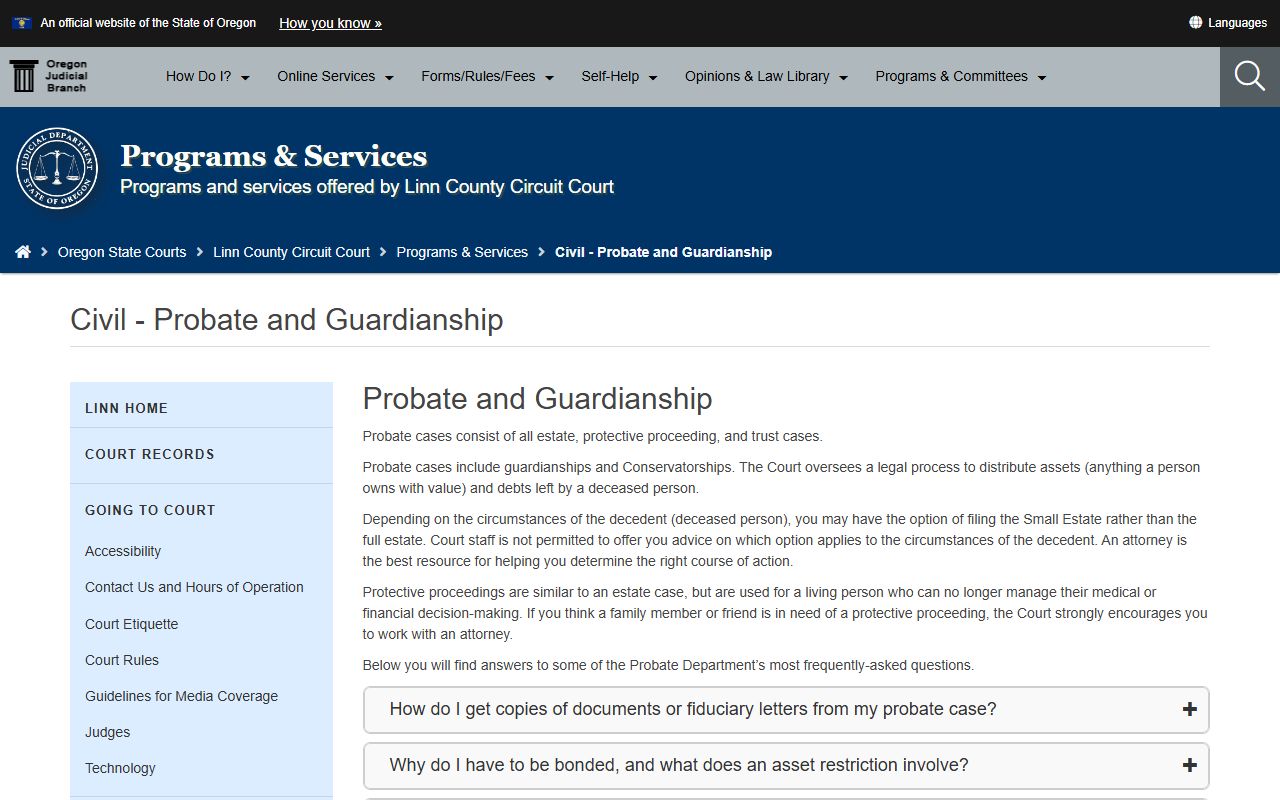
The local probate page is the best starting point for Linn County-specific guardianship, conservatorship, and estate procedures.
Linn County Probate Terms
Probate records use terms that can change the request path. A person looking for a will may need an estate file. A person looking for appointment authority may need fiduciary letters. A person trying to understand a protective case should distinguish guardianship from conservatorship because one concerns personal decisions and the other concerns financial management.
- Testator
- The person who made a will.
- Executor / Personal representative
- The person appointed or named to administer an estate and carry out court-authorized duties.
- Intestate
- A death without a valid will admitted for estate administration.
- Guardianship
- A protective proceeding focused on personal or medical decision-making.
- Conservatorship
- A protective proceeding focused on financial management.
- Fiduciary
- A person appointed to act for an estate, protected person, or similar court-supervised matter.
Search Linn County Probate Records
Probate search channels follow the same core court-record structure as other Linn County Circuit Court files. Use the Oregon Judicial Department free records search for basic public case information where available. Use OJCIN for subscription Register of Actions and judgment record access. Use the Linn Circuit Court public terminal or copy request process when actual documents are needed. Questions about certified fiduciary letters should go to the Probate Clerk because the court limits who may receive those letters.
- Identify whether the matter is an estate, trust, guardianship, conservatorship, or other protective proceeding.
- Search OJD free case access for basic public information if the case is not restricted.
- Use OJCIN when a Register of Actions or broader subscription court access is needed.
- Use the courthouse public terminal or copy request process for documents after the case number is known.
- Ask the Probate Clerk about fiduciary letters if the request involves appointment authority.
Linn County Probate Court Contact
The Probate Department is part of Linn County Circuit Court at the Linn County Courthouse. The courthouse records counter operates on the court schedule listed by OJD, and probate copy requests use the court's records request process. The Probate Clerk should be contacted for questions about fiduciary letters. Court staff can provide procedural and records routing, but they cannot choose the correct estate procedure or give legal advice.
Probate Department of Linn County Circuit Court
300 SW Fourth Avenue
Albany, OR 97321
541-967-3845
Records counter: 8:00 a.m.-noon and 1:00 p.m.-5:00 p.m., Monday-Friday
Linn County Probate Copy Fees
The research set provides Linn Circuit Court copy fees, certification fees, and electronic copy fees. It does not provide a separate probate filing-fee table, so probate filing amounts should be verified with the court before filing. For copies, certified orders, or certified probate documents, the court's standard case-copy fee schedule applies. For small copy requests under $5, the Circuit Court records page states that the fee is waived.
| Item | Amount / Rule |
|---|---|
| Paper copies | $3 per case plus $0.25 per page |
| Paper certified copies | $5 per document plus $0.25 per page |
| Exemplified copies | $10 per document plus $0.25 per page |
| Apostille certified copies | $5 per document plus $0.25 per page |
| Certificate of No Appeal | $5 per document plus $0.25 per page |
| Emailed copies | $3 per case |
| Certified emailed copies | $5 per request/case or $5 per document depending certification method |
| Email audio | $10 |
Linn County Fiduciary Letters
Court-certified copies of documents from a probate case can be requested through the Linn County Copy Center Records Request Form. Certified copies of fiduciary letters have a narrower rule: the court issues certified copies of fiduciary letters only to the appointed fiduciary or attorney of record. That limit is important for banks, title companies, family members, and heirs because possession of a case number does not mean every requester can obtain certified authority documents.
Letters Testamentary are used when a will has been admitted to probate. Letters of Administration are used when the decedent left no will. A full estate begins with a successfully filed petition to appoint a personal representative and often requires attorney help. If a hard-copy original will is submitted for admission to probate, it must be submitted within seven days of petition acceptance.
The ORS Chapter 114 probate law is the state-law source for estate administration and small-estate procedures.
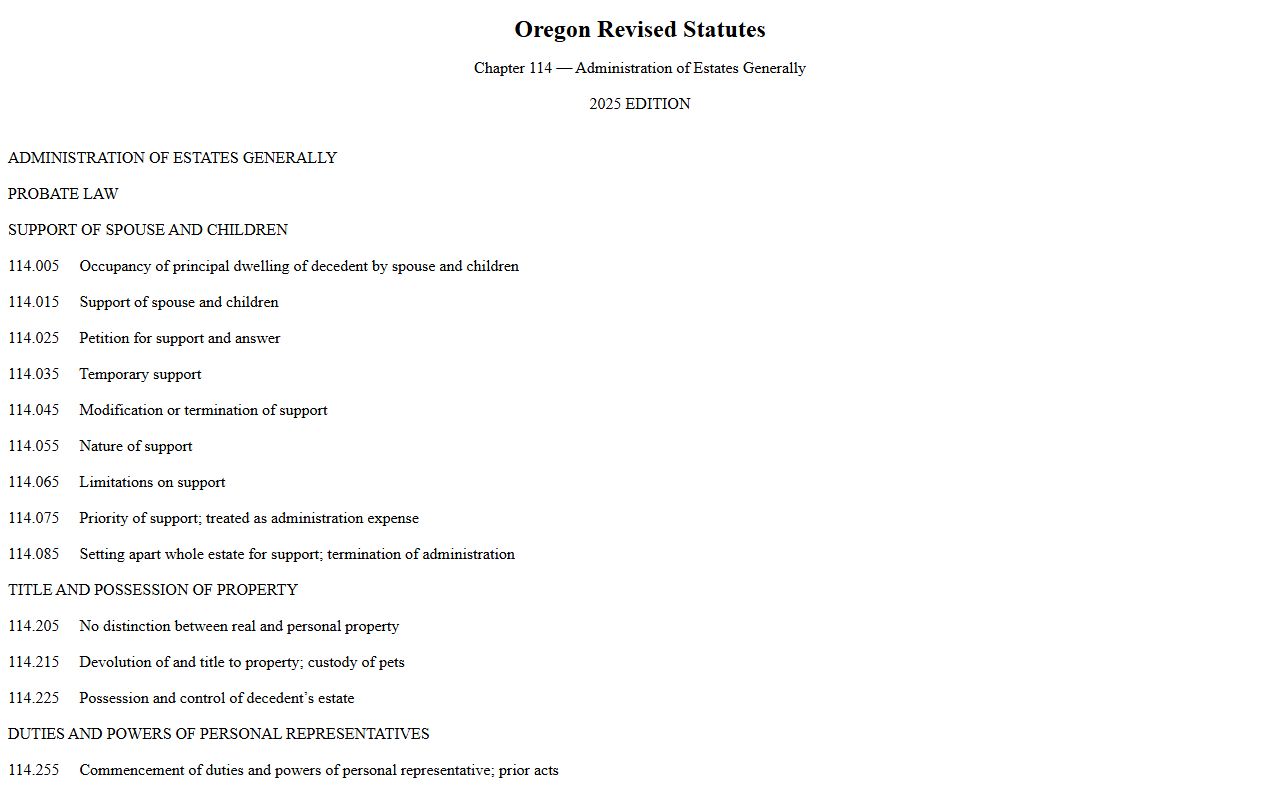
ORS Chapter 114 provides the statewide legal framework, while the Probate Department handles the Linn County case file.
Linn County Probate Bonds
The Linn probate research states that the court generally requires a fiduciary to be bonded for the full amount of assets to be administered plus annual expected income. The bond protects beneficiaries, protected persons, and creditors from breach of fiduciary duties. Unless statute allows a waiver, the court requires consent and adequate protection for all interested parties before waiving bond. In an intestate estate, consent from all heirs and assurance that creditors will not be harmed are usually required.
Asset restriction can be an alternative to bonding. Restriction language must be in the judgment, and the acknowledgment of restriction must be filed within 30 days after judgment entry. Court approval is required before disbursement, release, or sale of a restricted asset or account. These details are specific enough that a person should verify procedure with counsel or the Probate Clerk before assuming a bond can be waived.
Important: Court staff cannot decide whether a small estate, full estate, bond waiver, or asset restriction fits a case.
Linn County Guardianship Records
Protective proceedings involve a living person who can no longer manage medical or financial decision-making. Guardianship generally concerns personal or medical decisions. Conservatorship concerns financial management. Oregon law requires appointment of a visitor when a protective proceeding petition seeks guardianship. The visitor interviews people familiar with the alleged incapacitated person's circumstances, interviews the person, and reports factual findings and recommendations to the court.
Because guardianship and conservatorship cases can contain medical, financial, and personal details, access may be more limited than in a basic estate case. A public case register may show the existence of a case or events if public, while documents may require court review, redaction, or proof that the requester has a right to inspect them.
Linn County Probate Limits
Probate records are separate from marriage licenses, divorce judgments, criminal files, and federal bankruptcy cases. Marriage licenses are handled by the Linn County Clerk, while divorce judgments are Circuit Court domestic relations records. Federal bankruptcy cases for Linn County residents are handled through the U.S. Bankruptcy Court for the District of Oregon, with Linn County debtors filing in the Eugene office.
The Oregon Bankruptcy Court case information page explains federal bankruptcy case access.
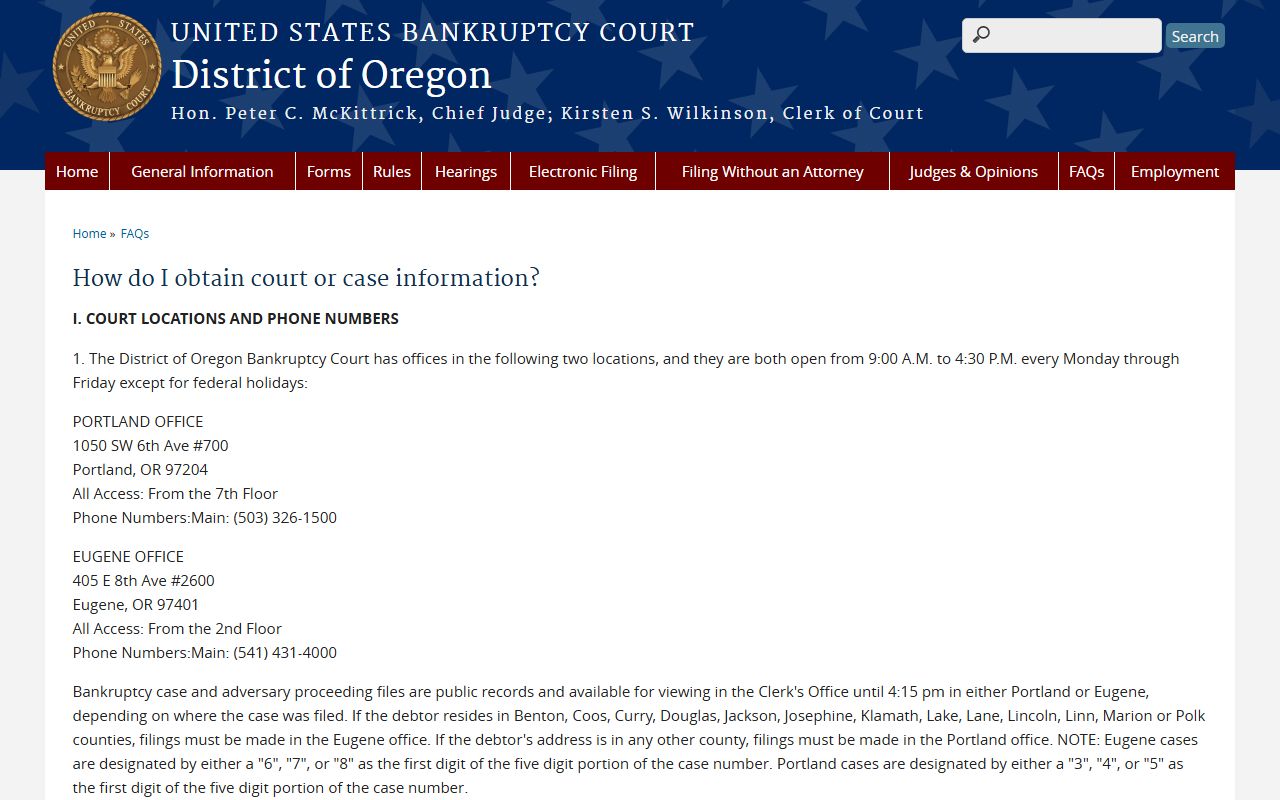
Bankruptcy records may affect estate administration, but they are not Linn County probate records and use a federal case system.
Note: If a probate issue depends on a prior marriage, divorce, or name change, request that separate record from the office that keeps it.